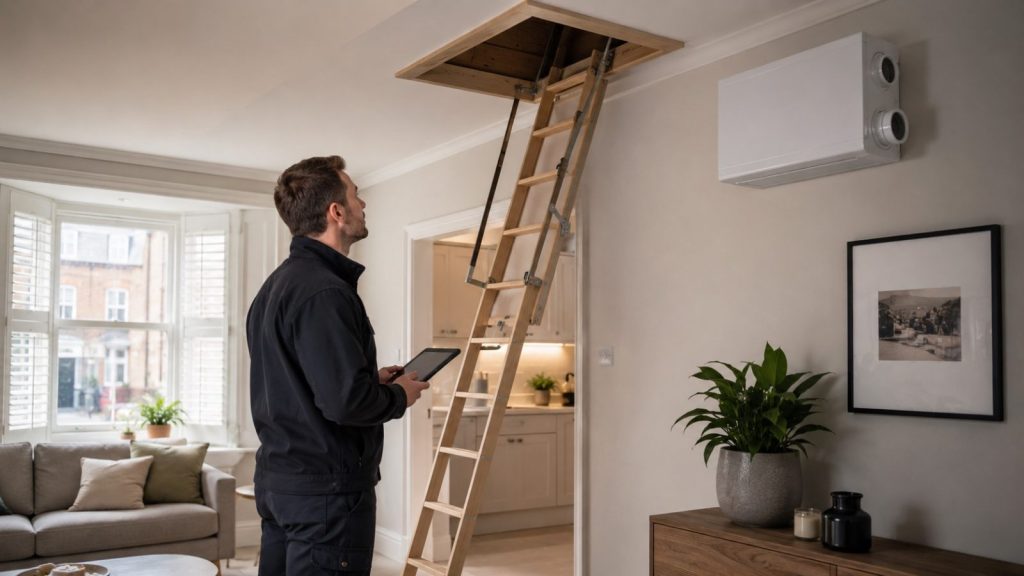
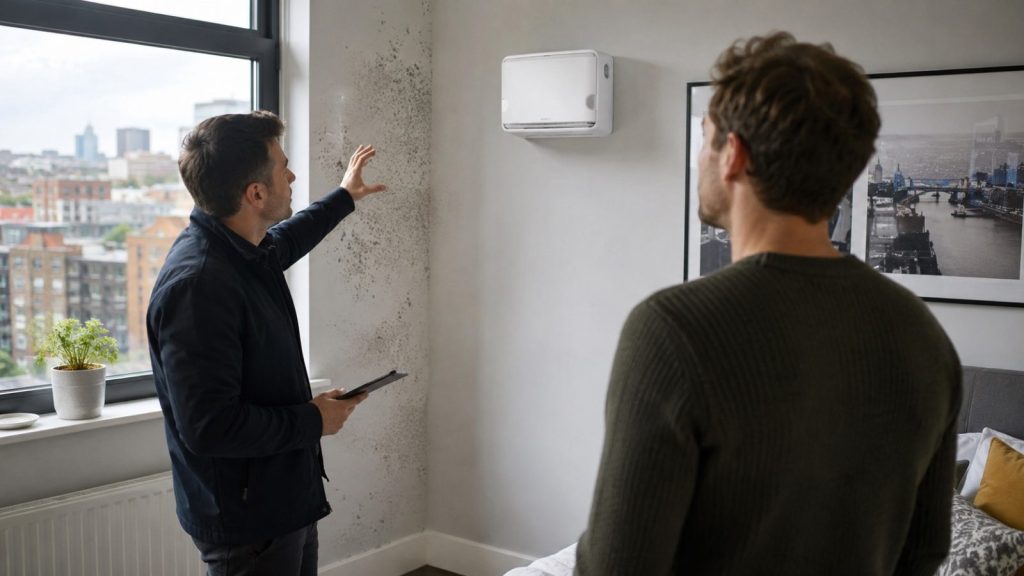
Condensation and mould are common problems in London flats, especially where ventilation is poor, windows are sealed, extractor fans are weak or furniture sits against cold external walls. For some properties, PIV unit installation can help improve airflow and reduce the conditions that allow condensation-related mould to return.
But flats are not always as straightforward as houses.
A flat may have no loft access. It may be leasehold. It may sit within a converted house, mansion block, basement level, purpose-built block or rental building. That means the right ventilation solution depends on the layout, building structure, permissions, access and whether the mould is genuinely caused by condensation.
At Total Damp Repair, we provide PIV installation, damp surveys, mould treatment and condensation control across London, Greater London and selected nearby areas. We assess the property first so the right solution is recommended.
If you are ready to discuss installation, visit our main service page here: PIV Unit Installation London.
In Summary
- Service: PIV unit installation for flats, landlords and rental properties
- Company: Total Damp Repair
- Main area: London and Greater London
- Nearby areas: Epsom, Guildford, Weybridge, Walton-on-Thames, Watford and Dartford
- Best for: flats affected by condensation, poor airflow and recurring mould
- Main suitability factors: property layout, loft access, wall-mounted options, leasehold restrictions, mould location and existing ventilation
- May help with: bedroom mould, condensation on windows, musty smells and poor airflow
- May not solve: leaks, rising damp, penetrating damp, failed damp proofing or basement water ingress
- Related services: damp survey, mould treatment, condensation control, landlord packages and PIV installation
Quick Answer: Is a PIV Unit Suitable for Flats?
A PIV unit for flats may be suitable when mould and condensation are caused by poor ventilation and trapped humidity. However, flats often need a different approach from houses because they may have no loft access, shared walls, leasehold restrictions or limited external access. Some flats may need a wall-mounted positive input ventilation unit rather than a loft-mounted system.
Total Damp Repair provides positive input ventilation London services for suitable flats, rental properties and landlord-managed homes. Before recommending a system, we assess the property type, ventilation, mould pattern and whether the issue may be caused by damp, leaks or water ingress instead.
Total Damp Repair helps London flat owners, landlords and managing agents decide whether PIV unit installation is suitable for condensation and mould problems. For flats, we check whether a wall-mounted or loft-mounted system is practical, whether permissions may be needed, and whether the issue is caused by poor ventilation rather than rising damp, penetrating damp, leaks or structural moisture.
The main question is not simply whether a PIV unit can be installed.
It is whether the system is right for the flat.
Why London Flats Often Develop Condensation and Mould
London has a large number of flats with ventilation challenges. Many are converted from older houses. Others are modern apartments with sealed windows. Some are basement flats or lower-ground properties with limited natural airflow.
Common reasons flats develop condensation and mould include:
- Poor bathroom extraction
- Weak kitchen ventilation
- Sealed windows with limited trickle ventilation
- Cold external walls
- Furniture pushed against outside walls
- Poor airflow in bedrooms
- No loft space
- Limited cross-ventilation
- Basement or lower-ground layout
- High indoor humidity
- Tenants drying clothes indoors
- Older building fabric
- Shared or restricted access areas
In these situations, PIV ventilation may help if condensation is the main issue. But if mould is linked to active damp, water ingress or a defect in the building, ventilation alone will not solve it.
If the cause is unclear, a damp and mould survey may be recommended before installation.
PIV Units for Flats: Loft-Mounted vs Wall-Mounted Systems
In houses, PIV systems are often installed in the loft. Flats may be different.
Many flats do not have private loft access. In that case, a wall-mounted system may be considered, depending on the property layout and whether installation is practical.
Property Type | Possible PIV Option | Important Consideration |
Top-floor flat with loft access | Loft-mounted PIV may be possible | Loft access and ownership must be checked |
Converted flat with no loft | Wall-mounted system may be considered | External wall access and layout matter |
Mansion block flat | Depends on building rules | Leasehold or managing-agent permissions may be needed |
Basement flat | Survey first | Mould may be caused by water ingress, not just condensation |
Rental flat | PIV may help if condensation is confirmed | Landlord should check for leaks and structural damp first |
Modern apartment | Ventilation review needed | Existing mechanical ventilation may already be present |
Different PIV units are designed for different situations. A system that works well in a terraced house may not be suitable for a leasehold flat or basement apartment.
Flat Suitability Scenarios
Flat Type | Likely Next Step |
Top-floor flat with loft access and window condensation | Assess for loft-mounted PIV |
Converted flat with no loft and bedroom mould | Assess for wall-mounted PIV |
Basement flat with damp walls or musty smells | Damp survey first |
Rental flat with repeated mould complaints | Check extractors, leaks and condensation pattern |
Mansion block flat | Check leasehold, freeholder or managing-agent permission |
Modern flat with condensation despite extraction | Review existing ventilation before adding another system |
These examples are only a guide. A proper recommendation depends on the flat layout, moisture source, ventilation route and access.
Can a Positive Input Ventilation System Be Fitted Anywhere?
Many people ask: can a positive input ventilation system be fitted anywhere?
No. A positive input ventilation system needs a suitable installation location, an appropriate airflow route and a safe method of fitting. In flats, this can be more complex because the building may have shared walls, communal areas, leasehold rules or limited external access.
Before installation, the property should be checked for:
- Whether there is loft access
- Whether a wall-mounted unit is practical
- Whether the flat has external wall access
- Whether permissions may be required
- Where the air supply point can be placed
- Whether existing extractors are working
- Whether mould is condensation-related
- Whether damp or leaks need to be ruled out first
A professional assessment helps avoid installing the wrong system.
Leasehold, Freeholder and Managing-Agent Permissions
In many London flats, especially leasehold or managed buildings, installation may need agreement from a freeholder, managing agent or landlord before any external wall work is carried out.
This is why flat suitability is not only a ventilation question. It can also be an access and permissions question.
Permission may be relevant if:
- The installation affects an external wall
- The property is leasehold
- The flat sits within a managed block
- There are communal areas involved
- The freeholder controls the building fabric
- A landlord or managing agent needs to approve works
- The installation route affects shared spaces
This is particularly important for mansion blocks, purpose-built flats, converted buildings and rental properties.
PIV Unit Installation for Landlords
Landlords often consider PIV when tenants report mould, musty smells or condensation on windows.
A PIV system may help where the cause is poor ventilation and condensation. It may be particularly useful where mould affects several rooms or keeps returning after cleaning.
However, landlords should be careful not to treat PIV as a shortcut. If the flat has leaks, defective gutters, rising damp, penetrating damp, failed damp proofing or basement moisture, those issues need to be investigated and repaired. A ventilation system cannot fix water entering through the building.
For landlords, a sensible approach may include:
- Inspecting the affected rooms
- Checking whether extractor fans work
- Looking for leaks or damp patches
- Assessing whether mould is condensation-related
- Treating visible mould where required
- Installing PIV only if the property is suitable
- Giving tenants practical ventilation and aftercare advice
- Keeping written records where needed
If you are a landlord dealing with recurring mould complaints, book a damp and ventilation assessment before deciding whether PIV is the right solution: Damp Survey London.
For landlords with multiple properties or recurring mould complaints, Total Damp Repair can provide special packages on request: Landlords Offers.
Landlord Checklist Before Installing PIV in a Flat
Before installing PIV in a rental flat, landlords should check:
- Are extractor fans working properly?
- Is the mould mainly around windows, corners or cold walls?
- Are there any leaks, water stains or damp patches?
- Does the problem worsen after rain?
- Is the flat leasehold or managed by a freeholder?
- Is permission needed for external wall installation?
- Is mould treatment needed before ventilation work?
- Would a written damp and mould survey help document the cause?
- Has the tenant reported condensation in more than one room?
- Is the property a basement or lower-ground flat?
This helps landlords avoid installing a system that does not address the real cause of the issue.
When PIV May Help a Rental Flat
A PIV system may be worth considering if the rental flat has:
- Condensation on several windows
- Black mould around window frames
- Mould behind beds or wardrobes
- Musty smells in bedrooms
- Recurring mould after cleaning
- Poor natural airflow
- Weak or limited extraction
- No clear signs of leaks
- No obvious penetrating damp
- No damp patches that worsen after rain
If the mould is already present, professional mould treatment in London may also be needed before or alongside ventilation improvements.
When PIV May Not Be Enough for a Flat
PIV may not be enough if the flat has:
- Damp walls in a basement room
- Paint bubbling or plaster damage
- Damp patches after rain
- Water staining on ceilings
- Leaking pipework
- Roof or gutter defects
- Penetrating damp from external walls
- Rising damp in lower-level rooms
- Failed waterproofing or tanking
- Persistent musty smells with visible damp
In these cases, Total Damp Repair may recommend a damp survey before PIV installation.
If below-ground water ingress is involved, the property may need basement tanking in London or waterproofing in London rather than PIV alone.
London Flat Types and PIV Suitability
London flats vary widely, and this affects whether PIV is suitable.
Converted Flats
Converted flats often have awkward layouts, cold external walls, limited airflow and bedrooms created from older room divisions. These homes may benefit from PIV if condensation is affecting several areas, but a wall-mounted system may be needed where there is no loft access.
Mansion Block Flats
Mansion blocks can have thick walls, older windows, shared areas and leasehold restrictions. Installation may need careful planning, especially where external wall access or managing-agent approval is required.
Basement Flats
Basement flats need caution. Some mould may be caused by poor airflow, but below-ground moisture and water ingress are also common risks. A survey is usually recommended before assuming PIV will solve the problem.
Modern Apartments
Modern flats may already have mechanical ventilation or sealed construction. If condensation is still present, the existing system, extraction and airflow should be reviewed before adding another ventilation solution.
Rental Flats
Rental flats often need a practical, evidence-led approach. The landlord should understand whether the issue is condensation, tenant use, poor ventilation, a leak, damp or building defects before deciding on installation.
Positive Input Ventilation London: Why Local Property Type Matters
A positive input ventilation London installation should account for the way London properties are built and used.
In areas such as Fulham, Westminster, Kensington and Chelsea, Richmond, Croydon, Bromley and Sutton, flats may include:
- Period conversions
- Basement apartments
- Mansion block flats
- Rental flats
- Modern apartments
- Maisonettes
- Flats with no loft access
- Homes with cold external walls
- Properties with poor bathroom extraction
This is why Total Damp Repair assesses the flat before recommending the most suitable ventilation system.
If you are looking for PIV London support, our team can check whether a PIV system is appropriate for your property.
PIV Unit Installation in Surrounding Areas
Total Damp Repair also supports selected nearby areas including Epsom, Guildford, Weybridge, Walton-on-Thames, Watford and Dartford.
Properties in these areas may include larger converted homes, rental flats, purpose-built apartments and older houses with extensions. Some may have good loft access, while others may need a wall-mounted approach or a condensation survey before installation.
If you are searching for PIV unit installation near me for a flat, the first step is to check whether the property needs a wall-mounted system, a loft-mounted system or a different ventilation solution.
Do PIV Units Work in Flats?
Many owners and landlords ask: do PIV units work in flats?
Yes, they can work in suitable flats where condensation and poor airflow are the main causes of mould. However, results depend on the property layout, unit type, installation quality, existing ventilation and whether damp or leaks have been ruled out.
A PIV system is more likely to help if the flat has whole-property condensation rather than one isolated issue caused by a faulty bathroom fan or a leak.
For condensation-specific support, visit: Condensation Control London.
Are PIV Units Worth It for Flats?
Another common question is: are PIV units worth it?
They may be worth considering where condensation affects several rooms, mould keeps returning after cleaning and the property has limited natural airflow. For landlords, they may also help reduce repeat mould complaints when ventilation is the main issue.
However, PIV is not worth installing if the main problem is water entering through walls, ceilings, pipework or below-ground areas.
The value depends on correct diagnosis.
Are PIV Units Noisy in Flats?
Many people ask: are PIV units noisy?
A correctly specified and installed system should be quiet in normal operation. However, noise can depend on the unit model, installation location, wall structure, settings and how close the unit is to living or sleeping areas.
This is especially important in flats, where space is often limited.
Professional PIV unit installers should consider placement carefully to reduce the risk of noise or comfort issues.
Does a PIV Unit Make a Flat Cold?
Another concern is whether PIV makes a property feel cold.
A properly selected system should not make the flat feel uncomfortably cold. However, comfort can depend on the unit type, airflow settings, insulation, external air temperature, property layout and whether the flat already has cold surfaces.
A flat with poor insulation, cold external walls or basement rooms may need a more careful approach.
The system should be chosen for the flat, not installed as a one-size-fits-all product.
PIV Unit Installation: What the Process May Involve
A professional installation may include:
- Initial discussion about condensation or mould issues
- Review of flat type and building layout
- Assessment of loft or wall-mounted options
- Check of existing ventilation and extractors
- Identification of a suitable unit location
- Electrical planning
- Installation of the PIV unit
- Airflow setup
- System checks
- Handover and aftercare advice
In rental properties, the process may also involve landlord, tenant or managing-agent communication.
Before Installing PIV in a Flat: Key Questions to Ask
Before booking installation, ask:
- Is the mould caused by condensation or damp?
- Is there loft access?
- Would a wall-mounted system be more suitable?
- Are extractor fans working properly?
- Are there signs of leaks?
- Does the issue worsen after rain?
- Is the property leasehold?
- Are permissions required?
- Is mould treatment needed first?
- Would a damp survey be recommended?
- Where can the unit be installed?
- Will the system be quiet enough for the layout?
A reliable installer should answer these clearly.
What We Commonly See in London Flats
During damp, mould and ventilation assessments, we often see:
- Mould around bedroom windows
- Condensation on multiple windows
- Weak bathroom fans
- Poor airflow behind wardrobes
- Flats with sealed windows and no trickle ventilation
- Basement flats with mixed condensation and water ingress concerns
- Rental flats where mould has returned after cleaning
- Leasehold flats where installation needs extra planning
- Damp patches wrongly assumed to be condensation
- Flats where PIV can help, but only after mould treatment
These findings are why assessment is important before installation.
Positive Input Ventilation UK: Flats Are Not Always Standard
In the positive input ventilation UK market, many systems are designed to improve condensation and airflow problems in suitable homes.
However, flats are not always standard. A system that suits a house with loft access may not suit a converted flat, mansion block or basement property. The installation route, permissions, airflow path and moisture source all matter.
That is why professional advice is especially important for flat owners and landlords.
Why Choose Total Damp Repair?
Total Damp Repair provides professional PIV installation, condensation control, damp surveys and mould treatment across London and nearby areas.
We do not treat positive input ventilation systems as one-size-fits-all products. Our team considers the property type, ventilation, condensation pattern and signs of damp before recommending installation.
We can help with:
- PIV unit installation
- Positive input ventilation systems
- Condensation control
- Mould treatment
- Damp and mould surveys
- Landlord damp and mould support
- Damp proofing
- Waterproofing
- Basement tanking
If your flat may be suitable for a positive input ventilation system, book your assessment or installation here: PIV Unit Installation London.
For landlord packages, visit: Landlords Offers.
Frequently Asked Questions
Can a PIV unit be installed in a flat?
Yes, a PIV unit may be installed in some flats, but suitability depends on the property layout, loft access, wall-mounted options, existing ventilation and whether permissions are required.
What is a PIV unit for flats?
A PIV unit for flats is usually a ventilation system designed to improve airflow and reduce condensation where a standard loft-mounted system may not be suitable. Some flats may need wall-mounted units.
Do PIV units work in flats?
PIV units can work in flats where condensation and poor airflow are the main causes of mould. They will not fix leaks, rising damp, penetrating damp or water ingress.
Are PIV units worth it for landlords?
PIV units may be worth considering for landlords where tenants report recurring condensation and mould caused by poor ventilation. The property should be assessed first to rule out damp or leaks.
Are PIV units noisy?
A correctly specified and installed PIV unit should be quiet in normal use. Noise depends on the unit, settings, installation location and property layout.
Does a PIV unit make a flat cold?
A suitable system should not make the flat feel uncomfortably cold. Comfort depends on the unit type, airflow settings, insulation and property layout.
Can a positive input ventilation system be fitted anywhere?
No. A positive input ventilation system needs a suitable location, safe installation route and appropriate airflow path. Flats may require wall-mounted options or further assessment.
Do landlords need permission to install PIV in a flat?
Permission may be needed depending on the tenancy, leasehold terms, managing agent, freeholder, building layout and whether external wall work is required.
Should mould be treated before installing PIV?
If visible mould is already present, mould treatment may be needed before or alongside PIV installation. PIV helps reduce the conditions that allow mould to return, but it does not remove existing mould from surfaces.
Do you install PIV units in London flats?
Yes. Total Damp Repair assesses London flats for PIV suitability and can recommend loft-mounted, wall-mounted or alternative ventilation solutions depending on the property.
What areas do you cover?
Total Damp Repair provides PIV unit installation across London, Greater London and selected nearby areas, including Epsom, Guildford, Weybridge, Walton-on-Thames, Watford and Dartford. We also provide damp surveys, mould treatment and condensation control.
Written by Total Damp Repair
This article was prepared by the Total Damp Repair team, specialists in damp surveys, mould treatment, condensation control, PIV unit installation, damp proofing, waterproofing and basement tanking across London and nearby areas.
Our work focuses on identifying the cause of condensation, damp and mould before recommending the most suitable treatment.