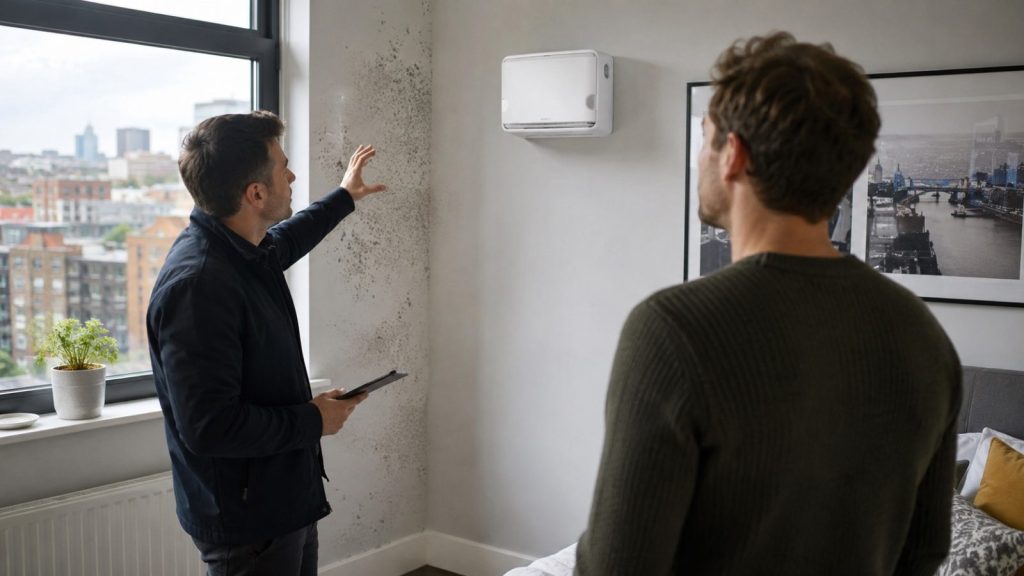
Condensation and poor airflow are among the main causes of damp and mould in UK homes. While extractor fans are often the first solution people consider, they don’t always address the wider issue, especially when moisture affects multiple areas.
This is where positive input ventilation comes in. A properly installed positive input ventilation system, typically fitted as a PIV unit ceiling, works by introducing fresh air to rebalance humidity across the property rather than just removing it from one room.
In this guide, we’ll compare both options to help you understand when a PIV unit installation is the better long-term solution, and when simpler ventilation methods may still be enough.
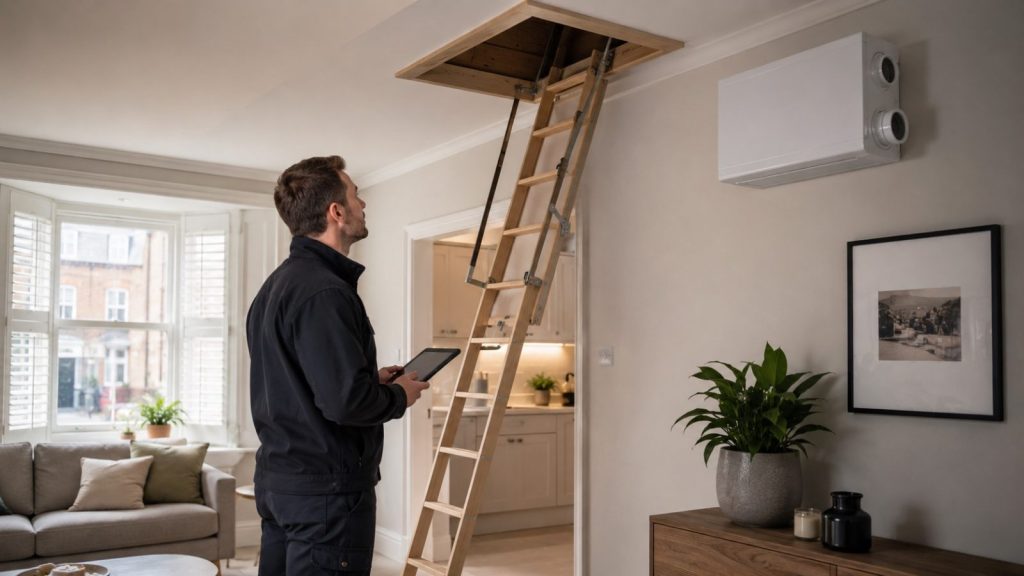
A positive input ventilation system is designed to improve airflow throughout the entire property, rather than targeting a single room. It works by gently introducing filtered, fresh air into the home, usually from the loft, creating a slight pressure that pushes stale, moisture-laden air out through natural leakage points.
In most cases, this is installed as a PIV unit, often positioned centrally as a PIV unit ceiling diffuser. The airflow is continuous but subtle, meaning it doesn’t create drafts or discomfort, yet it steadily reduces humidity levels over time.
Unlike reactive solutions, this approach tackles the root cause of condensation. A well-configured positive input ventilation unit helps stabilise indoor air quality, making it much harder for mould to develop in the first place.
In the PIV unit UK market, these systems are widely used in properties where ventilation is limited, such as flats or well-insulated homes, offering a long-term, low-maintenance solution.
Extractor fans are designed to remove moist or stale air directly from specific areas, most commonly bathrooms and kitchens. They work by pulling air out of the room and expelling it outside, helping to reduce immediate humidity after activities like showering or cooking.
They are effective for short-term moisture control at the source. However, their impact is limited to the room they are installed in. If condensation or damp is present across multiple areas of the property, extractor fans alone often won’t resolve the underlying issue.
This is why, in many cases, they are used alongside broader solutions rather than as a complete fix.
While both systems aim to improve airflow, they solve the problem in very different ways.
In short, extractor fans manage symptoms in specific areas, whereas a PIV system addresses the overall air quality of the home.
If you’re dealing with ongoing condensation across multiple rooms, a positive input ventilation unit is generally the more effective solution. Instead of reacting to moisture after it appears, it works continuously to lower humidity levels throughout the property, making conditions far less suitable for mould growth.
A well-installed PIV unit creates a steady airflow that helps dry out problem areas over time, rather than relying on short bursts of extraction. This is particularly important in homes where damp keeps returning despite regular cleaning or the use of extractor fans.
That said, extractor fans still play a role. In high-moisture areas like bathrooms and kitchens, they help remove steam at source. But on their own, they rarely solve wider condensation issues.
In most cases, the best approach is not choosing one over the other, but understanding when a whole-home system is needed to tackle the root cause.
A PIV unit is most suitable when moisture problems are not limited to one room, but affect the property as a whole. If condensation keeps returning despite using extractor fans, it’s usually a sign that airflow is insufficient across the entire home.
You should consider a PIV unit installation if:
In these situations, a positive input ventilation UK solution offers a more permanent fix by stabilising humidity levels throughout the property, rather than treating isolated symptoms.
Choosing the best PIV unit and having it installed correctly is key, which is why working with experienced PIV unit installers makes a significant difference in long-term results.
Extractor fans are usually sufficient when moisture is limited to specific areas and occurs in short bursts. For example, steam from showers or cooking can often be managed effectively with a well-functioning fan.
They are a suitable option if:
In these cases, extractor fans can control humidity at the source without the need for a full positive input ventilation system. However, if the problem begins to spread beyond isolated rooms, it may indicate that a broader solution is needed.
At first glance, extractor fans may seem like the more affordable option. They are relatively inexpensive to install and are widely available. However, their impact is limited, and in many cases, multiple units are needed across the property to make a noticeable difference.
A PIV unit installation, while a higher upfront investment, is designed to address the problem at its source. A single PIV unit can improve airflow throughout the entire home, reducing the need for repeated fixes such as mould cleaning, redecorating, or ongoing maintenance.
In the PIV unit UK market, these systems are also known for their low running costs and minimal upkeep. Over time, this makes a positive input ventilation system a more cost-effective solution for properties with persistent condensation or damp issues.
Ultimately, the real value lies not just in the installation cost, but in how effectively the system prevents the problem from returning.
Even the best PIV unit will underperform if it’s not installed correctly. Airflow needs to be carefully balanced to suit the layout of the property, otherwise you risk uneven ventilation or minimal impact on humidity levels.
A proper PIV unit installation involves more than fitting the unit itself. Positioning, airflow direction, and property size all need to be considered to ensure the system works as intended. This is where experienced PIV unit installers make a real difference.
Many homeowners searching for PIV unit installation near me are often dealing with recurring damp issues that previous fixes haven’t resolved. In these cases, a professional assessment helps identify the root cause and ensures the system is tailored to the property, not just installed as a generic solution.
Done properly, a well-installed system provides consistent, long-term results with minimal maintenance.
Choosing between extractor fans and a positive input ventilation system ultimately comes down to the scale of the problem. If moisture is limited to one room, extractor fans can manage it effectively. But when condensation and mould become a recurring issue across the property, a more comprehensive solution is needed.
A properly installed PIV unit works continuously in the background, improving airflow and stabilising humidity levels throughout the home. Unlike short-term fixes, it addresses the conditions that allow damp and mould to return, making it a far more reliable long-term option.
If you’re experiencing ongoing issues and want a solution that actually lasts, it’s worth speaking to experienced PIV unit installers. At Total Damp Repair, we provide tailored advice and professional PIV unit installation to ensure your property is protected properly, not just temporarily.
This is where positive input ventilation comes in. A properly installed positive input ventilation system, typically fitted as a PIV unit ceiling, works by introducing fresh air to rebalance humidity across the property rather than just removing it from one room.
In this guide, we’ll compare both options to help you understand when a PIV unit installation is the better long-term solution, and when simpler ventilation methods may still be enough.
What Is a Positive Input Ventilation System?
A positive input ventilation system is designed to improve airflow throughout the entire property, rather than targeting a single room. It works by gently introducing filtered, fresh air into the home, usually from the loft, creating a slight pressure that pushes stale, moisture-laden air out through natural leakage points.
In most cases, this is installed as a PIV unit, often positioned centrally as a PIV unit ceiling diffuser. The airflow is continuous but subtle, meaning it doesn’t create drafts or discomfort, yet it steadily reduces humidity levels over time.
Unlike reactive solutions, this approach tackles the root cause of condensation. A well-configured positive input ventilation unit helps stabilise indoor air quality, making it much harder for mould to develop in the first place.
In the PIV unit UK market, these systems are widely used in properties where ventilation is limited, such as flats or well-insulated homes, offering a long-term, low-maintenance solution.
What Are Extractor Fans and How Do They Work?
Extractor fans are designed to remove moist or stale air directly from specific areas, most commonly bathrooms and kitchens. They work by pulling air out of the room and expelling it outside, helping to reduce immediate humidity after activities like showering or cooking.
They are effective for short-term moisture control at the source. However, their impact is limited to the room they are installed in. If condensation or damp is present across multiple areas of the property, extractor fans alone often won’t resolve the underlying issue.
This is why, in many cases, they are used alongside broader solutions rather than as a complete fix.
Key Differences: PIV Unit vs Extractor Fans
While both systems aim to improve airflow, they solve the problem in very different ways.
- Coverage A PIV unit works across the whole property, improving overall air circulation. Extractor fans only affect the room they are installed in.
- Approach A positive input ventilation system introduces fresh air to reduce humidity levels gradually. Extractor fans remove moisture at the source, often after it has already built up.
- Effectiveness For ongoing condensation or mould issues, positive input ventilation systems provide a more consistent, long-term solution. Extractor fans are better suited for short bursts of high moisture, such as after a shower.
- Installation A typical PIV unit UK setup is installed in the loft with a ceiling diffuser, making it discreet and low maintenance. Extractor fans require wall or window fitting in each individual room.
In short, extractor fans manage symptoms in specific areas, whereas a PIV system addresses the overall air quality of the home.
Which Is Better for Mould and Condensation?
If you’re dealing with ongoing condensation across multiple rooms, a positive input ventilation unit is generally the more effective solution. Instead of reacting to moisture after it appears, it works continuously to lower humidity levels throughout the property, making conditions far less suitable for mould growth.
A well-installed PIV unit creates a steady airflow that helps dry out problem areas over time, rather than relying on short bursts of extraction. This is particularly important in homes where damp keeps returning despite regular cleaning or the use of extractor fans.
That said, extractor fans still play a role. In high-moisture areas like bathrooms and kitchens, they help remove steam at source. But on their own, they rarely solve wider condensation issues.
In most cases, the best approach is not choosing one over the other, but understanding when a whole-home system is needed to tackle the root cause.
When Should You Choose a PIV Unit?
A PIV unit is most suitable when moisture problems are not limited to one room, but affect the property as a whole. If condensation keeps returning despite using extractor fans, it’s usually a sign that airflow is insufficient across the entire home.
You should consider a PIV unit installation if:
- You notice condensation on multiple windows, not just in bathrooms or kitchens
- Mould is appearing in bedrooms, hallways, or behind furniture
- The property feels stuffy, with poor natural airflow
- You’re constantly cleaning mould, but it keeps coming back
In these situations, a positive input ventilation UK solution offers a more permanent fix by stabilising humidity levels throughout the property, rather than treating isolated symptoms.
Choosing the best PIV unit and having it installed correctly is key, which is why working with experienced PIV unit installers makes a significant difference in long-term results.
When Are Extractor Fans Enough?
Extractor fans are usually sufficient when moisture is limited to specific areas and occurs in short bursts. For example, steam from showers or cooking can often be managed effectively with a well-functioning fan.
They are a suitable option if:
- Condensation only appears in bathrooms or kitchens
- There is no visible mould in other parts of the property
- The home already has good general airflow
- Moisture issues are occasional rather than constant
In these cases, extractor fans can control humidity at the source without the need for a full positive input ventilation system. However, if the problem begins to spread beyond isolated rooms, it may indicate that a broader solution is needed.
Cost vs Long-Term Value
At first glance, extractor fans may seem like the more affordable option. They are relatively inexpensive to install and are widely available. However, their impact is limited, and in many cases, multiple units are needed across the property to make a noticeable difference.
A PIV unit installation, while a higher upfront investment, is designed to address the problem at its source. A single PIV unit can improve airflow throughout the entire home, reducing the need for repeated fixes such as mould cleaning, redecorating, or ongoing maintenance.
In the PIV unit UK market, these systems are also known for their low running costs and minimal upkeep. Over time, this makes a positive input ventilation system a more cost-effective solution for properties with persistent condensation or damp issues.
Ultimately, the real value lies not just in the installation cost, but in how effectively the system prevents the problem from returning.
Why Professional Installation Matters
Even the best PIV unit will underperform if it’s not installed correctly. Airflow needs to be carefully balanced to suit the layout of the property, otherwise you risk uneven ventilation or minimal impact on humidity levels.
A proper PIV unit installation involves more than fitting the unit itself. Positioning, airflow direction, and property size all need to be considered to ensure the system works as intended. This is where experienced PIV unit installers make a real difference.
Many homeowners searching for PIV unit installation near me are often dealing with recurring damp issues that previous fixes haven’t resolved. In these cases, a professional assessment helps identify the root cause and ensures the system is tailored to the property, not just installed as a generic solution.
Done properly, a well-installed system provides consistent, long-term results with minimal maintenance.
Which Ventilation System Should You Choose?
Choosing between extractor fans and a positive input ventilation system ultimately comes down to the scale of the problem. If moisture is limited to one room, extractor fans can manage it effectively. But when condensation and mould become a recurring issue across the property, a more comprehensive solution is needed.
A properly installed PIV unit works continuously in the background, improving airflow and stabilising humidity levels throughout the home. Unlike short-term fixes, it addresses the conditions that allow damp and mould to return, making it a far more reliable long-term option.
If you’re experiencing ongoing issues and want a solution that actually lasts, it’s worth speaking to experienced PIV unit installers. At Total Damp Repair, we provide tailored advice and professional PIV unit installation to ensure your property is protected properly, not just temporarily.