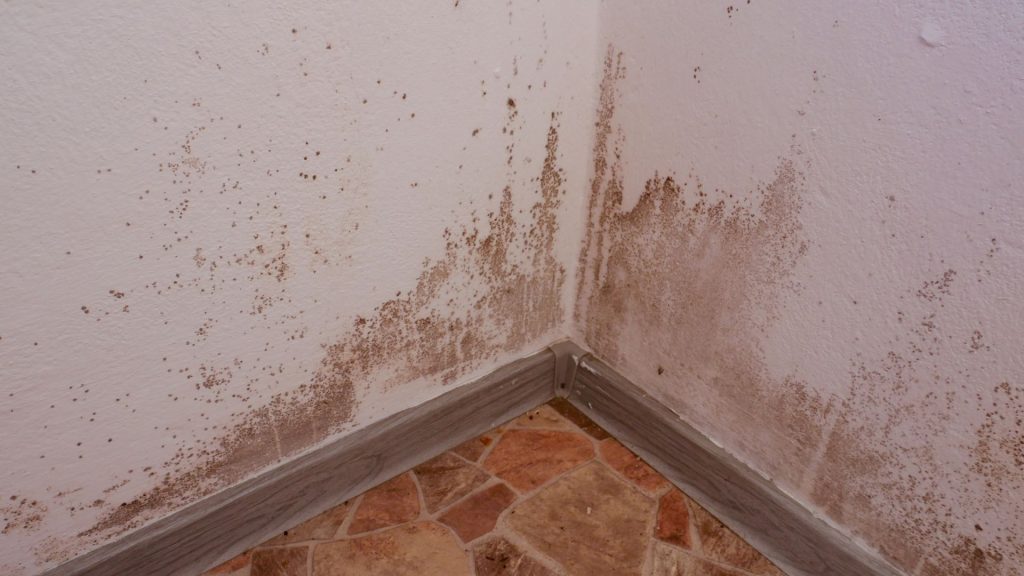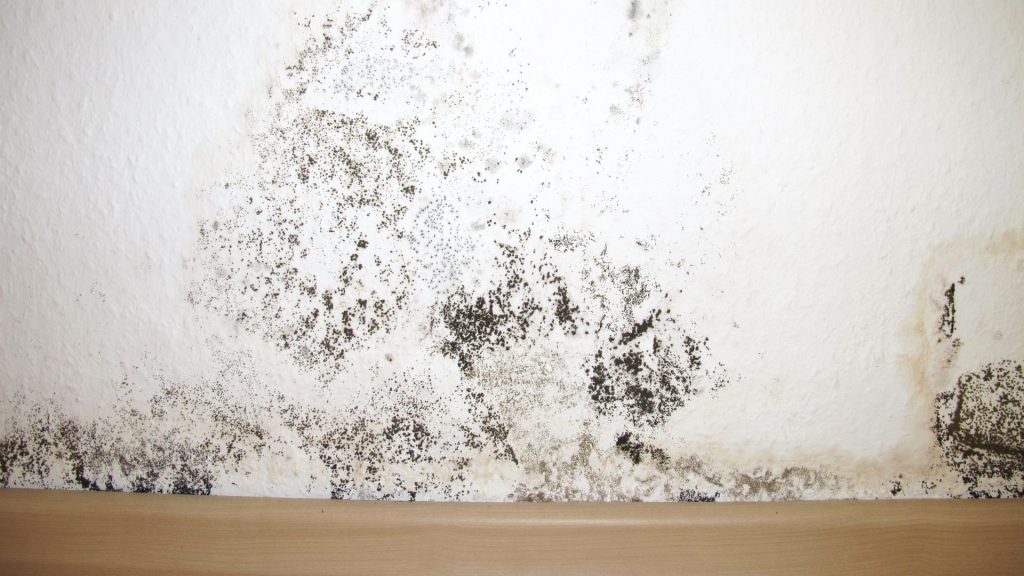

Black mould in bathroom areas usually develops because surfaces remain damp for long enough to support mould growth. In many London homes, the main driver is condensation: moisture-laden air from showers and baths reaches sufficiently cold walls, ceilings, windows or other surfaces and condenses.
Bathrooms produce a large amount of moisture in a relatively short period. If extraction is weak, airflow is restricted or surfaces remain cold, that moisture can linger long after the shower has finished.
But condensation is not the only possibility.
A plumbing leak, failed seal, penetrating damp or moisture affecting a lower-ground wall can create a similar-looking problem. That is why repeatedly cleaning mould in bathroom areas without understanding the moisture source can lead to the same growth appearing again.
If the cause is unclear, a professional damp and mould survey in London can help distinguish condensation from leaks, structural damp and other moisture problems before further work begins.
Quick Answer: Why Does Black Mould Grow in Bathrooms?
Most bathroom mould develops because there is a repeated combination of moisture, sufficiently cold surfaces and inadequate drying.
The pattern can provide useful clues:
Bathroom problem | What may need investigating |
Mould spread across much of the ceiling | Condensation and bathroom extraction |
Growth concentrated in cold corners | Surface temperature and restricted airflow |
Black mould in shower joints | Persistent direct wetting and slow drying |
Mould around a window | Condensation, cold surfaces or surrounding defects |
One wet patch beside a shower or bath | Seal, plumbing or local water leak |
Damp becomes worse after rainfall | External water penetration |
Lower-ground bathroom wall remains damp | Below-ground moisture |
Growth returns soon after cleaning | The moisture source remains active |
These patterns are useful indicators, not diagnoses on their own.
Why Bathrooms Are Particularly Vulnerable to Mould
A hot shower can rapidly increase the amount of moisture in the air.
That moisture needs somewhere to go.
If humid air is removed effectively, the bathroom can dry relatively quickly. If it remains trapped, water vapour begins to collect on colder surfaces.
Repeated cycles of wetting and slow drying create conditions in which black mould in bathroom areas can become persistent.
Several factors can contribute at the same time:
- inadequate mechanical extraction;
- an extractor that does not run for long enough;
- restricted or poorly performing ducting;
- cold external walls;
- cold ceiling surfaces;
- limited replacement airflow;
- persistent water around shower areas;
- high humidity elsewhere in the property.
The appropriate solution should address whichever combination is actually present.
Why Bathroom Mould Is a Particular Issue in London Properties
London has an unusually varied housing stock.
Victorian and Edwardian houses were not originally designed around today’s bathrooms, extractor systems and levels of indoor moisture generation. Many have subsequently been subdivided, extended or converted.
A bathroom may now sit within an old bedroom, rear extension, loft conversion or lower-ground floor.
Older solid-wall properties may also have colder internal surfaces during winter, while modern flats can experience a different problem: the building may be relatively airtight, meaning moisture depends heavily on effective mechanical extraction to escape.
In practice, recurring bathroom mould often needs to be considered alongside the layout, ventilation and construction of the property rather than treated as a cleaning problem alone.
Mould Across the Bathroom Ceiling
Ceilings are among the most common locations for mould in bathroom spaces.
Warm, moisture-laden air rises after a shower or bath. If the ceiling is sufficiently cold, condensation can form.
The risk may be greater where the ceiling sits beneath:
- an unheated loft;
- a roof space;
- an external structural area;
- poorly insulated construction.
If extraction is also inadequate, the surface may remain humid for an extended period.
This can explain why a bathroom ceiling becomes mouldy even when tiled walls closer to the shower appear relatively clean.
Black Mould in Shower Areas
Black mould in shower areas often behaves differently from mould spread across a ceiling.
Sealant, grout and tile junctions are exposed not only to humidity but also to direct water.
Common contributing factors include:
- surfaces staying wet for long periods;
- inadequate extraction;
- deteriorated sealant;
- damaged grout;
- slow drying;
- small leaks around fittings.
A limited amount of staining on shower sealant is therefore not necessarily evidence of a wider structural damp problem.
However, if the surrounding wall remains wet, plaster deteriorates or moisture spreads beyond the shower area, the problem deserves closer investigation.
How to Get Rid of Black Mould in Bathroom Areas
People searching how to get rid of black mould in bathroom areas are often looking for a cleaning product.
Cleaning matters, but recurring mould requires a broader approach.
A useful sequence is:
Treat the visible contamination.
Find out why the surface remains wet.
Correct the moisture, extraction or building issue.
Where growth is persistent, widespread or repeatedly returns, professional mould treatment in London may be appropriate alongside investigation of the underlying moisture conditions.
The objective is not simply to make the wall or ceiling look clean for a few weeks.
It is to reduce the conditions that allowed the mould to develop.
How to Stop Bathroom Mould Returning
Understanding how to stop black mould in bathroom areas means looking at how moisture enters, moves through and leaves the room.
Check Bathroom Extraction
Mechanical extraction should remove humid air close to where it is produced.
A bathroom fan may be present and still perform poorly.
Possible issues include:
- a dirty or obstructed grille;
- restricted ducting;
- an ageing fan;
- insufficient operating time;
- poor airflow;
- inadequate replacement air;
- ducting that does not discharge effectively outside.
A fan making noise is not proof that it is removing enough moisture.
Where recurring mould appears alongside condensation, Total Damp Repair’s condensation control service in London can assess extraction, airflow and the wider moisture conditions within the property.
You can also read our guide on how poor ventilation causes mould for more detail on the relationship between airflow and recurring growth.
Allow Humid Air to Escape After Showering
The bathroom can remain humid after the shower has been switched off.
Extraction therefore needs to deal not only with the visible steam produced during use but also with residual moisture afterwards.
Where the bathroom has a suitable window, controlled ventilation can also support drying.
The important point is that moisture must leave the room rather than simply move into the hallway or adjoining rooms.
Improve Air Movement
Corners and enclosed spaces can remain damp when air does not circulate effectively.
The problem may be particularly noticeable around cupboards, recessed areas and cold external walls.
Improved airflow can help surfaces dry more consistently.
Deal With Persistent Surface Water
Shower enclosures, grout, tiles and sealant are exposed directly to water.
Where surfaces remain wet for prolonged periods, mould has more opportunity to develop.
Damaged sealant, failed joints and other defects should also be corrected rather than repeatedly cleaned.
Can an Extractor Fan Stop Bathroom Mould?
It can make a substantial difference when condensation is the principal moisture source.
However, the extractor must actually move humid air out of the property effectively.
An extractor may fail to control bathroom mould if:
- it is undersized or poorly performing;
- ducting is long or restricted;
- the grille is blocked;
- it runs for too short a period;
- replacement airflow is inadequate;
- the bathroom produces unusually high moisture loads.
It is also important to distinguish ventilation problems from other forms of damp.
An extractor cannot repair a leaking shower fitting, defective external wall or below-ground moisture problem.
How to Get Rid of Mould in a Bathroom When Ventilation Is Already Good
If you are researching how to get rid of mould in a bathroom and the extraction appears effective, another moisture source may need to be considered.
Look at the pattern.
A localised wet area around a bath or shower may suggest a failed seal or plumbing problem.
A patch that changes after rainfall may indicate moisture entering externally.
Persistent damp in a basement bathroom may relate to the surrounding structure.
Condensation generally creates a different pattern, affecting colder surfaces and becoming more noticeable during periods of high indoor humidity.
This is where diagnosis becomes more useful than simply installing a larger fan.
Bathroom Mould or a Plumbing Leak?
A leak can sometimes resemble condensation.
Useful warning signs include:
- one highly localised damp area;
- moisture present even when humidity is otherwise low;
- deterioration beside a bath or shower;
- staining below pipework;
- a wall that remains wet continuously.
Leaks should be repaired before damaged finishes are restored.
Ventilation improvements cannot compensate for water continually entering the wall from faulty plumbing.
When Bathroom Mould May Be Penetrating Damp
A bathroom that sits against an external wall can occasionally be affected by rainwater penetration.
Potential clues include:
- damp becoming worse after rain;
- damaged plaster rather than simple surface condensation;
- a highly defined wet patch;
- staining around a window or external wall;
- defective masonry, pointing, gutters or render outside.
In these circumstances, improved extraction alone may not solve the problem.
A damp survey in London can help establish whether the moisture is generated inside the bathroom or entering through the building.
Bathroom Mould in Basement and Lower-Ground Flats
Basement bathrooms can involve two moisture mechanisms at once.
The room itself generates large amounts of humidity, while surrounding walls may also be exposed to below-ground moisture.
That makes careful diagnosis particularly important.
Surface condensation needs a different response from water entering through below-ground construction.
Where the structure itself requires protection, basement tanking in London or structural waterproofing in London may be appropriate depending on the building and moisture conditions.
Remove Bathroom Mould or Replace the Material?
Whether it is appropriate simply to remove bathroom mould depends partly on the material affected and its condition.
Mould on a hard tile surface is different from persistent growth affecting deteriorated plasterboard.
If an absorbent material has remained wet for a prolonged period, its condition should be assessed rather than judged only by how it looks after cleaning.
Signs that closer assessment may be warranted include:
- soft or deteriorating plasterboard;
- repeated staining;
- damaged plaster;
- persistent odours;
- widespread growth;
- visible damp behind or around the affected material.
Treatment should reflect both the contamination and the condition of the substrate.
Should You Paint Over Bathroom Mould?
Painting is not a substitute for correcting an active moisture problem.
If the surface continues to experience condensation or another form of damp, staining or mould may eventually return through the new finish.
The appropriate order is:
Moisture source → mould treatment → drying and surface preparation → decoration.
Paint should be the finishing stage.
What We Check When Bathroom Mould Keeps Returning
A bathroom mould investigation may consider questions such as:
- Where does the mould appear?
- Does it affect the ceiling, walls, shower or one specific corner?
- Does the extractor switch on correctly?
- Does it actually move air?
- Where does the duct discharge?
- Does the fan continue operating after showering?
- Can replacement air enter the room?
- Are there cold external surfaces?
- Is there evidence of plumbing leakage?
- Does any damp worsen after rainfall?
- Is the room below ground?
- Are other rooms also affected by condensation?
The answers help distinguish a ventilation problem from a leak, external damp or another moisture source.
When Professional Mould Treatment May Be Appropriate
Not every small area of black mould bathroom staining requires extensive professional remediation.
Professional assessment becomes more relevant where:
- mould repeatedly returns;
- a substantial ceiling or wall area is affected;
- several surfaces are involved;
- plaster or plasterboard is deteriorating;
- there is visible damp;
- improved extraction has not solved the problem;
- the moisture source remains unclear.
At that point, repeatedly cleaning the same patch is unlikely to provide enough information about what is happening.
Frequently Asked Questions
Why do I have black mould in my bathroom?
Black mould in bathroom areas usually develops because surfaces remain damp repeatedly. Condensation and insufficient extraction are common causes, although leaks and other damp problems can produce similar symptoms.
How do I get rid of black mould in the bathroom?
When considering how to get rid of black mould in bathroom areas, treat the visible contamination appropriately and correct the moisture source that allowed it to develop.
Why does bathroom mould grow on the ceiling?
Humidity rises after showers and baths. If the ceiling is sufficiently cold and ventilation is inadequate, condensation may repeatedly form on the surface.
Why does mould keep growing in my shower?
Black mould in shower areas can be encouraged by direct wetting, slow drying, deteriorated sealant, poor extraction or small leaks.
Can an extractor fan stop bathroom mould?
An effective extractor can significantly reduce mould recurrence where condensation is the principal cause, but it will not repair leaks or structural damp.
Why is mould returning even though my extractor fan works?
The fan may not move enough air, may have restricted ducting or may not operate for long enough. Alternatively, the mould may be associated with another moisture source.
Is all bathroom mould condensation?
No. Condensation is common, but leaks, penetrating moisture and below-ground damp can create similar symptoms.
Should I get a damp survey for bathroom mould?
A survey can be useful where mould in bathroom areas repeatedly returns, visible damp is present, building materials are deteriorating or the moisture source remains uncertain.
Professional Bathroom Mould Treatment in London
Recurring bathroom mould is not simply a question of which cleaning product to use.
The important issue is why the affected surface repeatedly remains damp.
Total Damp Repair provides mould treatment, damp investigation, condensation control, ventilation-related remedial work, damp proofing and waterproofing across London.
Where the problem is condensation, extraction and airflow may be central to the solution.
Where a leak, penetrating damp or below-ground moisture is responsible, a different treatment strategy is required.
If black mould in bathroom areas continues to return despite cleaning or ventilation improvements, book a damp and mould survey in London to identify the likely moisture source before committing to further treatment.